
Many people think pain only comes from an injury in the body. But pain also comes from the brain. One very important idea in pain science is called neuroplasticity. This big word simply means this:
Your brain can change
Your brain can learn new patterns
Your brain can also “unlearn” painful patterns
This is good news for anyone living with chronic pain.
What Is Neuroplasticity?
Neuroplasticity is the brain’s ability to rewire itself. Your brain can change its structure and the way it works throughout your whole life. It changes based on:
Your experiences
Your thoughts
Your behaviors
Your movements
Sometimes, these changes can make pain stick around longer than it should. But with practice and the right training, your brain can learn to turn down pain signals.
How Pain Gets “Stuck”
When you live with pain for a long time, the brain can begin to see certain movements as “danger,” even when they’re safe. This makes the pain system extra sensitive. Movements that once felt normal can start to feel painful.
But remember: The brain learned this pattern, which means it can also unlearn it.
How We Help the Brain Rewire: Virtual Embodiment Training
Our 12-week virtual embodiment program is designed to help your brain feel safer with movement again to overcome fear-avoidance and improve function. You slowly practice movements in a safe, guided way through a program guided by behavioral specialists. Over time, your brain learns:
“This is safe.”
“I don’t need to protect this area so much.”
“I can calm down.”
This reduces the threat response inside the brain and helps lower chronic pain.
Our main goal is to help you reach your functional goals, such as:
Going back to work
Playing your favorite sport again
Standing long enough to wash dishes or cook
Getting through daily life with less fear and more freedom
Everyone’s goal is different, and that’s okay.
A Simple Look at How the Brain Handles Pain
The brain has four main areas, called lobes:
Frontal lobe – thinking, planning
Temporal lobe – memory and hearing
Parietal lobe – touch and body awareness
Occipital lobe – vision
Inside these areas is a group of brain regions that work together to create the pain experience. This is called the pain matrix.
Here are the key parts:
1. S1 and S2 (Somatosensory Cortex)
These areas help you feel where pain is coming from.
When you have chronic pain, these areas can become extra sensitive, making pain feel stronger than it really is.
2. ACC (Anterior Cingulate Cortex)
This part handles emotions and motivation.
With chronic pain, the ACC can become overactive, leading to:
Stress
Worry
Feeling overwhelmed
Emotional suffering
3. Insular Cortex (Insula)
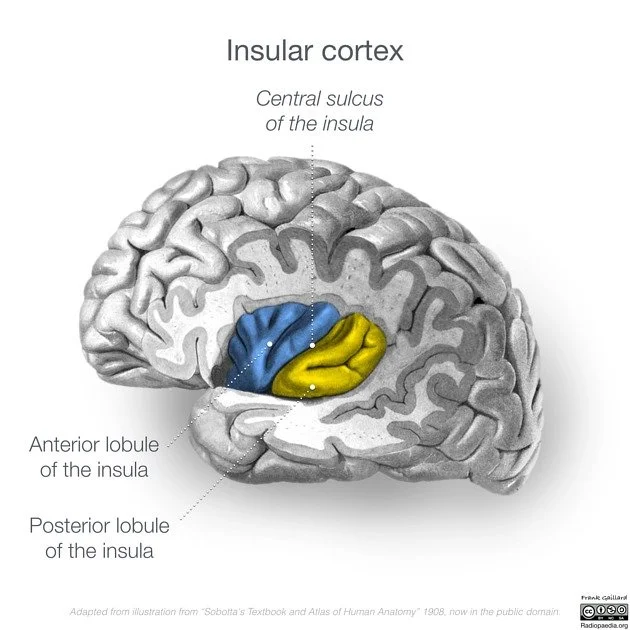
This area helps you sense your inner body map—things like heartbeat, breathing, and internal sensations.
Changes in the insula are often seen in people with chronic pain.
Scientists even found that the insula and S2 are the only areas that can actually produce pain when directly stimulated.
Why This Matters
Understanding these brain regions helps you see that your pain is real, and it’s not “just in your head.” Your brain has simply learned patterns that can be changed with practice.
Your brain is powerful.
Your brain is adaptable.
Your brain can heal.
Our programs are designed to guide you, step-by-step, toward calmer movement, less fear, and more control over your body. Reach out to us today to see if you qualify to enroll in our 12-week program.